Like a man with a tiger outside his gate
He not only couldn’t relax
But he couldn’t relate
— Neil Diamond | Crunchy Granola Suite | 1971
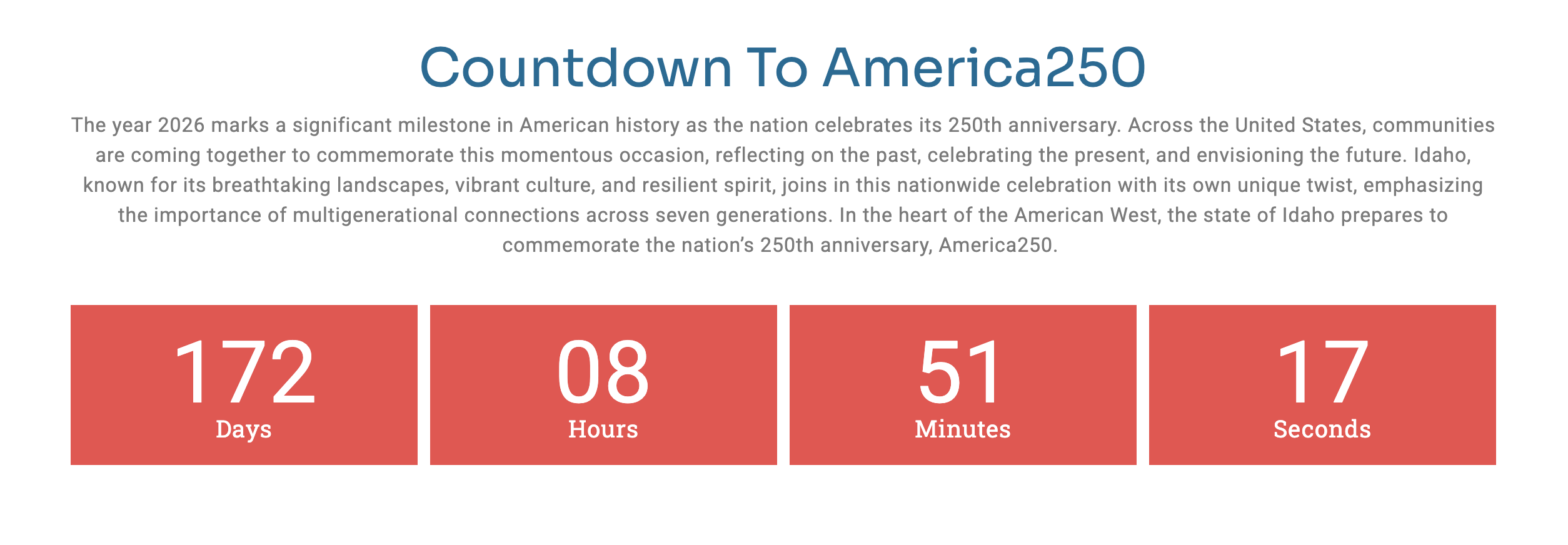
David James Johnson (78) has an idea. Peppi Duran Flores (47) has had enough. Richard Milhouse Nixon (55) has a good feeling about Idaho. Aubrey Mathews (6) has a villain to catch. A group of Boise teenagers has had a change of heart. Wallace L. Davis has got a busy 37 days ahead of him. Janet L. Gallimore has exactly 172 days, eight hours, 51 minutes and 17 seconds.
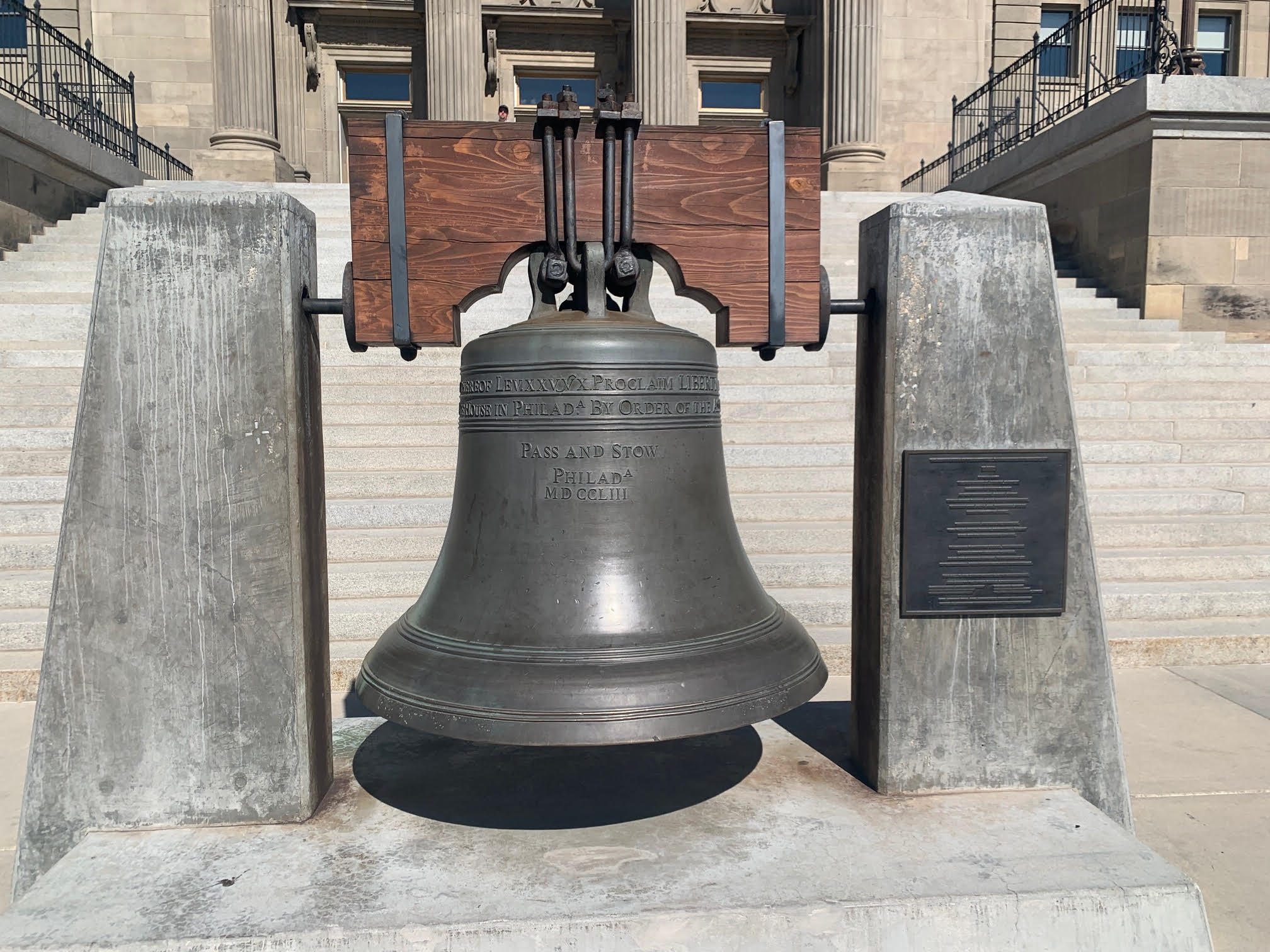
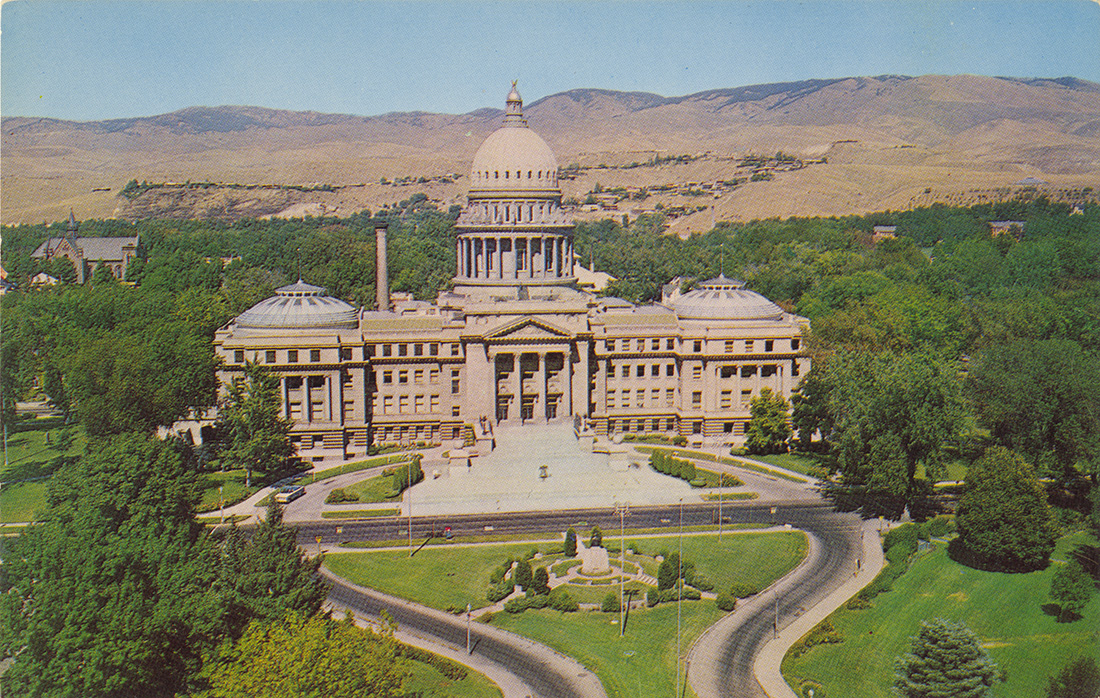
 David Johnson does not mince words. An architectural originalist, the Kamiah resident imagines John Tourtellotte and Charles Hummel, the designers of Idaho’s Renaissance Revival 1912 Statehouse, “rolled over in their graves when the state’s Liberty Bell display was designed and installed.” The former art gallery owner and self-described political activist has no qualms about the bell itself, conceding the monument’s placement, front and center on the Capitol steps, “could not be any better.” (This Liberty Bell lover agrees). Unlike other purist historical preservationists, who saw no place for a slightly kitschy midcentury advertising prop on the grounds of their stately institutions (Wyoming and Monticello, I’m looking at you), Johnson believes the Idaho Liberty Bell belongs exactly where it’s been for 75 years of the Capitol’s 113-year existence. He has only one very specific grievance.
Peppi Flores has had enough. He’s been thinking about this moment for weeks, playing it over and over in his head. Driving northwest along West Jefferson Street, the Capitol dome of his adopted state — with its 5-foot bronze eagle topper — comes into view out the passenger side window. He lays on the gas.
Four weeks ago, 150 Mexican American farmworkers — the hands that bring Idaho potatoes to the world — attended a special Easter mass at St. John’s Cathedral, then marched three blocks carrying lighted candles and singing in Spanish. On these Statehouse steps, they waved union flags and aired their grievances. The previous month, Governor Cecil Andrus signed the 1972 Farm Labor Act, predicting it would bring “security and confidence” to Idahoans. The farmworkers and their leader, Cesar Chavez, don’t agree, rejecting it as anti-union. Among their concerns is a provision that allows growers to obtain an injunction to halt a work stoppage for 72 hours if perishable crops are involved, but fails to define perishable — leaving that interpretation to a district judge — and a provision allowing farms to spray any legal pesticide. Workers fear that farm owners will not abide by the legally established post-application waiting periods before sending workers back into the fields.
It’s now or never. Live to toil and suffer another day, or do something about it — make a statement, draw attention, speak out. Flores accelerates thoughtfully, deliberately — then jerks the steering wheel hard to the right. He jumps the Capitol curb. No turning back now. No brakes, no more second-guessing. His head almost goes through the roof as man and machine hobble jerkily up four shallow concrete steps. Then gravity and liberty and rage all collide at once in a split, deafening second.
Bongggggggg.
Peppi Flores has collided head-on with Idaho’s Liberty Bell. The replica budges about five inches askew of its concrete pedestal but does not break. Now surging with adrenaline, the driver springs from his seat, pops his trunk and pulls out a heavy tow chain and metal toolbox. He’s surprised no one has yet seen or approached him. He bounds up two more longer perrons of concrete steps, leaping two at a time until he reaches the Capitol doors.
He swings the tow chain like a heavy metal whip and strikes the locked brass and glass doors. The first pane shatters as shards shower in on the Statehouse floor and down at his feet. When the chain gets heavy, he pulls steel bolts and wrenches from his toolbox, hurling and shouting and feeling the intoxicating rush of being heard. He breaks six glass panes in total before police stop him without further violence. Flores confesses his premeditation to Ada County Sheriff’s sergeant Ed Barnes, explaining, as Barnes later recounted, that he was “fed up with the way Chicanos are treated, and he would like to be deported … to Cuba.”
The thing that stopped Peppi Flores is also the thing David Johnson can’t get beyond: the thick, sturdy concrete stand and stations holding the replica in place. “It’s an architectural style mismatch to say the least, and a product of the 1950’s when ‘brutalist’ style architecture (raw concrete) began to take hold in post-war Europe and America with its straight geometric shapes and lines.”
But Johnson doesn’t just have a grievance; he has a plan. He’s imagined the kind of grand, central housing Hummel and Tourtellotte would have designed had they had a Liberty Bell to work with.
Johnson’s aim is threefold: display his state’s Liberty Bell in a setting better befitting both the replica and the Statehouse it stands before, protect it from the elements, and — most importantly — engage the children of Idaho in learning about, protecting and preserving the monument and the symbolism behind it, for theirs and future generations.
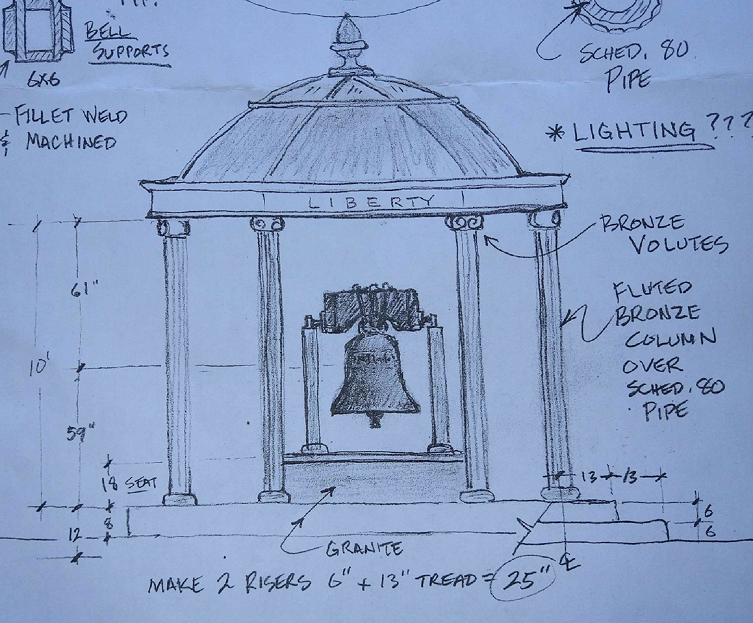
Johnson doesn’t want the state to pay for the new housing. He plans to engage Idaho’s schoolchildren in a large-scale, micro-donation campaign to fund the project. I’ve agreed not to share any more of the glorious, buzzworthy details of his campaign until it formally launches. But suffice it to say, his big idea oozes over with wholesome, apple pie, Norman Rockwell Americana — with just a touch of schmaltz.
One hundred and twelve days ago, Richard Nixon’s most serious competitor for the thirty-seventh presidency of the United States was gunned down in a hotel kitchen hallway in Los Angeles.
The former Vice President doesn’t roll into town on a mule-drawn cart like his fellow primary contestant, the frugal millionaire and liberal Republican Nelson Rockefeller.
A raucous and well-behaved crowd gathers around the Idaho Statehouse steps — either 7,500 or 12,000, depending on whether the Boise Police or Ada County Sheriff is better at counting people. The tinny reverb of a local rock band bounds down the Capitol steps and hits the gathered throngs right in the gut. Red and pink and blue and green balloons sway gently in the crisp late September air. The crowd parts as Pat Nixon holds her husband’s hand, and the couple springs sprightly up the Statehouse steps. The Idaho Liberty Bell tolls a slow and steady salute.
Richard Nixon is now the cool candidate.
On a warm and breezy July Monday, the good citizens of Idaho again rally at the foot of their Capitol’s grand staircase. This time, the guest of honor is a little shorter and a lot cooler than Richard Nixon. Reiterating what the crowd already knows, Boise Police Chief Mike Masterson lauds the efforts of six-year-old Aubrey Mathews, then bends down to pin a medal on her cloak. “You have shown extraordinary crime-fighting skills.”
Born at the dawn of the new Millennium, Aubrey was your typical happy-go-lucky six-month-old when her parents noticed one of her eyes starting to move in a rapid, jittery manner. The cause of her condition, Nystagmus, was Optic Glioma, a tumour behind the eye. Because it had grown into her optic nerve and was pressing against her hypothalamus (the body’s thermostat and control center), doctors determined the tumor was inoperable.
An MRI at 15 months showed the tumor was growing. Aubrey underwent chemotherapy treatment that lasted for another 15 months. The Optic Glioma remained stable for three and a half years, but 11 months ago, it started growing again. Another six months of chemo. Five months free of chemo. And now she’s here, fighting crime.
The Idaho chapter of the Make-A-Wish Foundation worked with state and local government, law enforcement and private businesses to bring this day to fruition. As her alter ego, Star, Matthews leads her full superhero squad (Dog Man, House Lifter, Lion Lady, Frog Lady, Sky Girl, Tree Girl and Martian Hunter) in hot pursuit of the archvillain, Black. They criss-cross the city flanked by two dozen of Boise’s finest.
The chase leads, as such things do, to a dramatic culmination on the Statehouse steps at the crack of noon. Star uses her X-ray vision, super speed, super strength and blowing power to rescue a hostage from Black’s evil clutches, then ties the villain to the Liberty Bell until police can bring him to justice.
Janet L. Gallimore, Executive Director of the Idaho State Historical Society, has a shot clock over her shoulder. The U.S. Semiquincentennial — or, as it’s been mercifully rebranded, America250 — is a yearlong (plus) celebration of the 250th anniversary of the signing of the Declaration of Independence. It might have officially kicked off on New Year’s Eve as 2024 turned to 2025. It seems to officially conclude with a recreation of George Washington crossing the Delaware River on Christmas Day, 2026. Anyhoo, the apex of the event will take place on Independence Day, 2026. America has a website. Each state has a website. All are replete with calls to action: volunteer, donate, share your American story. Some states have events planned throughout the year. Arizona is packing its Liberty Bell onto a mobile history museum and visiting every county in the state. Pennsylvania is placing fiberglass Liberty Bell replicas painted by local artists throughout the state. Delaware is hosting trivia night and tabletop role-playing games.
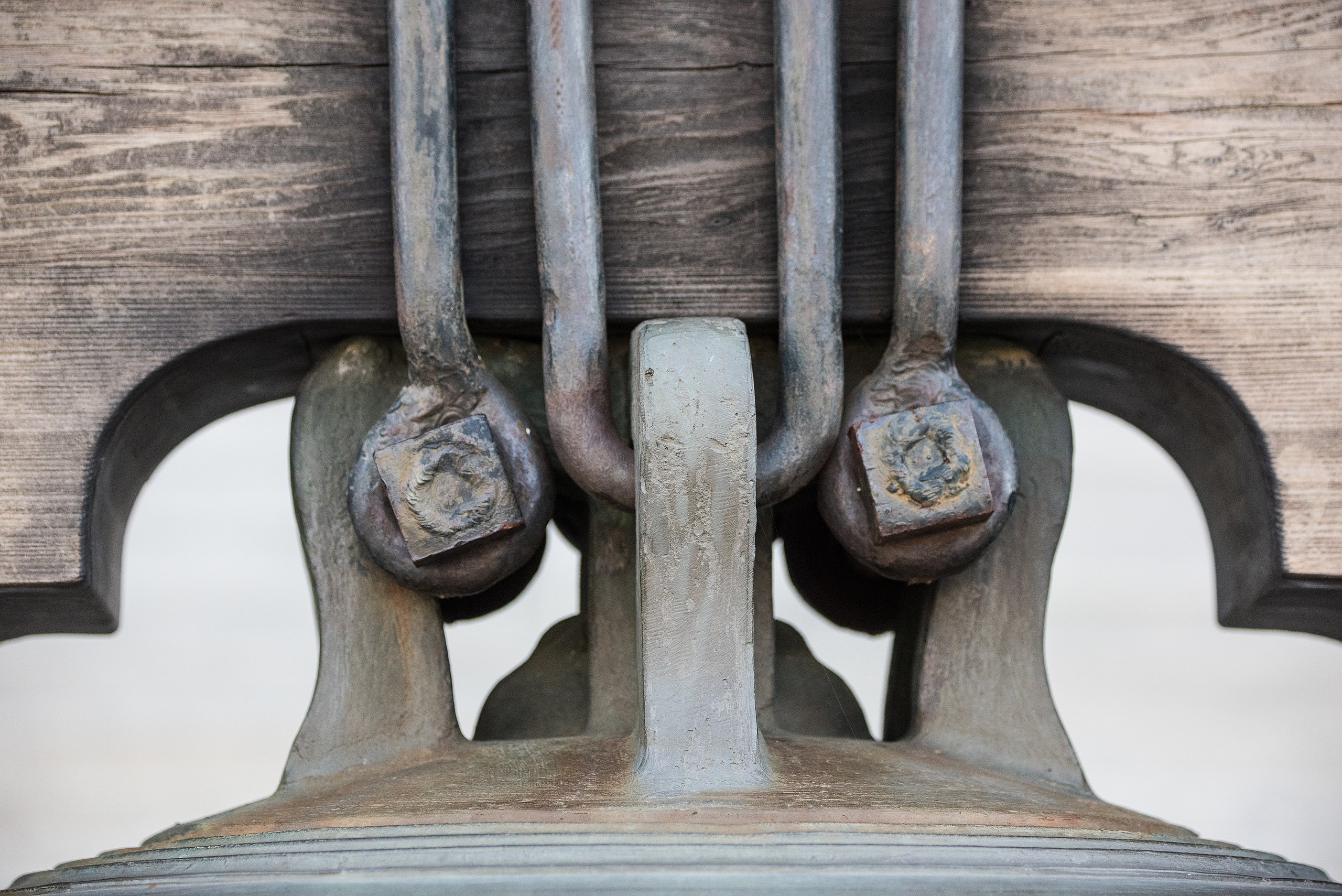
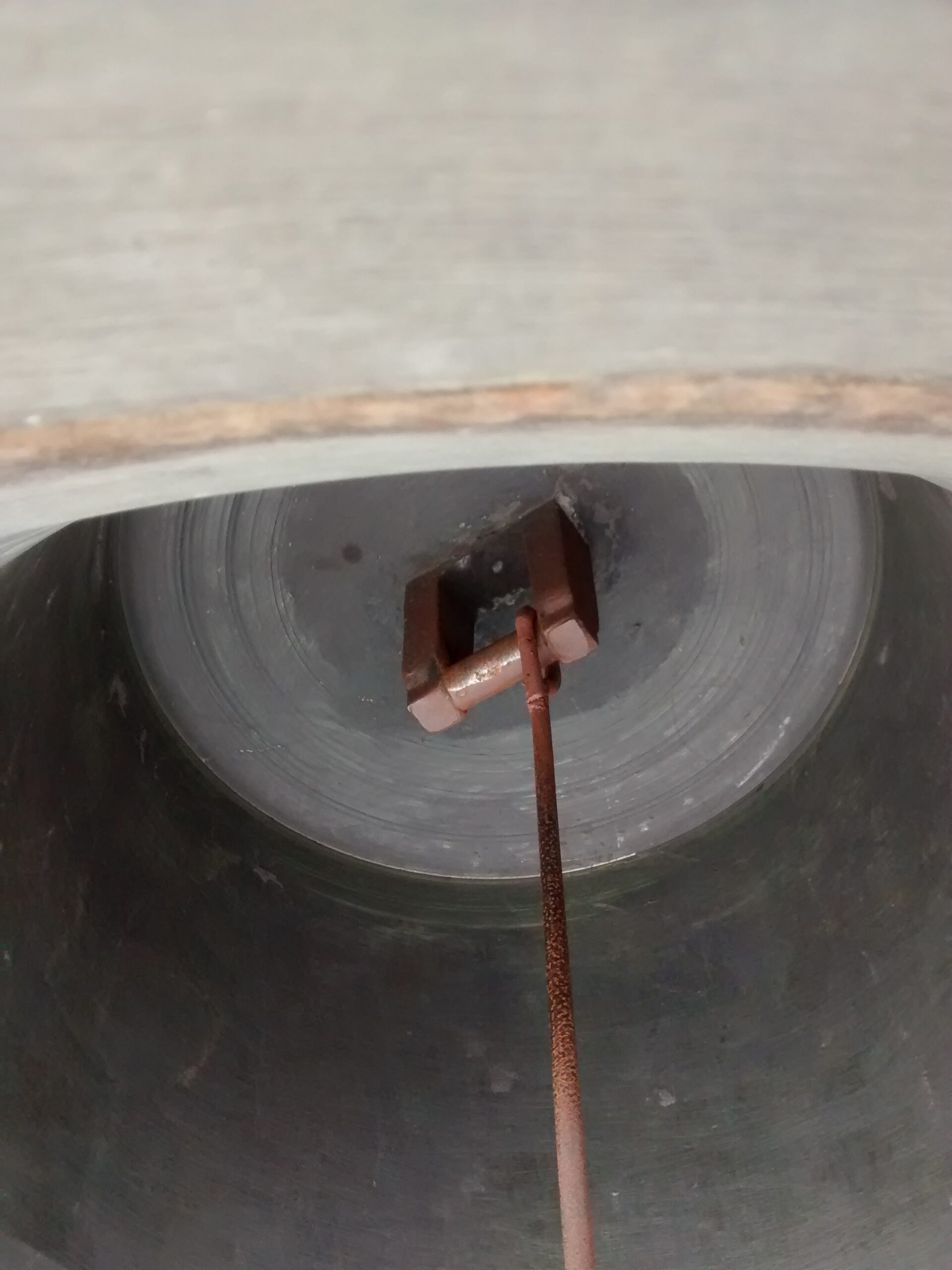
On December 19, 2025, after canceling 29 of 31 previously awarded America250 grants, the America250 in Idaho Advisory Council approved a measure to spend up to $28,500 to have South Carolina’s Bell Foundry Christoph spruce up Idaho’s Liberty Bell just in time for the celebration. Christoph will clean the replica and fabricate a new yoke with a protective metal cap similar to Alaska’s bell. Previous restoration efforts took place in 2009 and 2018. Gallimore and Christoph are still working out the fine details of schedule and budget. The countdown to America250 continues to tick tock tick.
David Johnson is concerned that a monthslong absence of the Idaho Liberty Bell during the Semiquincentennial would impede his fundraising efforts and squander a golden opportunity to draw attention to the replica during a time when Idahoans might be more likely than usual to think warm patriotic thoughts.
On the outskirts of the 3,098-person farm town of Rupert, Idaho, Wallace Davis, a veteran driver for Pocatello’s Garrett Truck Lines, slows the brand-new 1950 Ford flatbed truck he’s piloting down to a crawl. Approaching equally slowly in the opposite direction is a Rupert police car, followed by a National Color Guard, followed in turn by the Rupert High School Band. The contingent meets Wallace and his cargo — the state’s shiny new Liberty Bell — and leads a slow parade through town into Rupert Square.
Davis and his 2,080-pound companion have already logged 2,300 miles from their journey’s outset at the Navy Yard in Brooklyn, New York — but their mission has only just begun. The two will visit 84 towns in 38 of Idaho’s 44 counties1 during a truncated 37-day drive2 to sell $1,690,000 in U.S. Savings Bonds. Despite the warm Rupert reception, as the campaign marches on, Idahoans are slow to buy what the U.S. Treasury is selling.
At a Soda Springs appearance, Dean Christensen, Caribou County bond drive chairman, lays out the true path to financial independence — lending the federal government your money: “I urge every man, woman and child who hasn’t yet participated in the Independence Drive to let Idaho’s Liberty Bell remind him or her of the vital meaning of thrift in its bearings on one’s individual independence. I suggest that the citizens of Soda Springs help themselves to financial independence by signing up for the payroll savings plan where they work, or on the bond-a-month plan where they bank, in order to maintain Caribou County’s record of achievement in all previous drives.”
In Twin Falls, chairman of the Board of City Commissioners, R.J. Schwendiman, calls his community to task over tepid bond sales: “I wonder why, at the present time and under existing world conditions, we are slow to come to the financial support of our government.”
Schwendiman then turns the microphone over to the Liberty Bell itself (voiced by local radio personality Lloyd James). The bell reminds Idahoans of its historical importance and of their global duty: “I spoke when this nation was born. Now I speak today to all men for whom liberty and independence are sweeter than life itself. Unless you, who make up this nation, remain spiritually, physically and economically strong, peace and happiness, liberty and independence will fade from this earth.”
The chairman turns up the heat, acknowledging that while his fellow citizens give of their time and money — even their lives — they are currently failing in the common cause of making the federal government financially strong. He sells the U.S. Treasury’s new brand positioning: War Bonds helped fund victory in nearly back-to-back World Wars. Saving Bonds will help us win the inevitable next one: “By oversubscribing the quota assigned to us, we will serve notice to our enemies both within and without our borders that we again stand ready to meet any threat to our form of government.”
A pack of Boise teens has nothing better to do. The entire rest of the state is on edge. Thirty-three days ago, the one thing (other than potatoes) most people think of when they think of Idaho concluded when Randy Weaver and his three daughters surrendered at their Ruby Ridge compound. But the teenagers are really just bored.
Shortly after the stroke of midnight, Capitol security officers hear the unmistakable peal of Idaho’s Liberty Bell. This is no particular cause for alarm; a bell sitting out in public twenty-four-seven begs to be rung. And many a Boisean has answered the call over the last twenty-two years. This is a college town after all. When guards make their way to the replica, they notice something amiss: the clapper is gone.3
The next day, Dan Julian of the Idaho Division of Public Works reports the clipped clapper to the local newspapers, explaining the two-foot-long, 15-pound cast-iron bonger would be hard to replace with one that would create the same tone to which Idahoans have become accustomed. He’s already contacted officials in the nation’s capital to find specifications so he can order a replacement.
Nine days later, this time just before the stroke of midnight, Capitol security guards hear their Liberty Bell ring out once more. As they bound around the grounds and start down the steps, they see ten teens standing about the bell. They’re singing. Right as the officers make out the tune — the Star-Spangled Banner — the kids spot the guards and scatter.
A note taped to the bell provides some answers and raises more questions: “In our ignorance we were unaware of the trouble it had caused. Now that it is returned to the rightful place, we hope that it will remain there and ring loud and clear for the city once again.” The overachiever thievers went on to point out what good care they took of the relic, taking credit for “cleaning off a lot of gum some disrespectful human had placed there.”
Last, they signed the note, “Clapper Capers.”
I spoke with Janet Gallimore on January 9, 2026. She was quick to point out that plans to restore Idaho’s Liberty Bell are still in flux. There are stakeholders to listen to, schedules to nail down, contracts to review. Recent news stories about the bell’s restoration happened because the advisory council’s budget allocation approval process was a public hearing, not because the council was ready to hold a press conference.
Gallimore confirmed the state is no longer in possession of the replica’s original clapper or steel display frame, and she has no idea or record of when the lighter clapper was installed.4 One thing she’s crystal clear on: the bell will remain ringable throughout the Semiquincentennial and beyond. Once it returns from restoration, that is.
An actual press release from January 20 set the Idaho Liberty Bell’s near future in stone. Idaho residents are invited to give it a ring and a proper sendoff from 10:30 am to 12:30 pm on January 30th. It’s due back in four to six months. David Johnson tells me he’ll skip the ceremony.
Wallace Davis and the Liberty Bell end their Idaho tour in Caldwell on the Fourth of July. The following day, on the south steps of the Statehouse, Theo. H. Wegener, Idaho’s savings bond co-chairman, officially presents the replica to Governor C.A. Robins, along with a certificate of donation from U.S. Treasury Secretary John W. Snyder. Robins accepts the monument on behalf of Idaho citizens.
An impressive formation of celebrants includes the 1950 Stamp Ladies, Auxiliary Veterans units, the Junior American Legion Drum and Bugle Corps and Minute Maids in colonial garb. As the Boise Elks Gleemen sing the closing notes of America, four F-51 Mustang fighter planes5 swoop low over the Statehouse. For the first time since it officially became property of the people of Idaho, the Liberty Bell rings out. Governor Robins extols the virtues of federalism in the face of a growing global communist threat: “This is a time when we must renew allegiance to this nation of ours that stands alone today as guardian of liberty in a world sorely distraught.”
Despite a late-campaign rally, Idaho ultimately came up short, selling 87.8% of its quota — one of only ten regions not to meet or exceed goals.6 Only Kansas and North Dakota turned in worse performances.
Not long after the Independence Day celebration, Capitol custodians remove the Idaho Liberty Bell from the U.S. Steel frame and mount it between two diagonal concrete stanchions atop a concrete base, above the first four steps up from West Jefferson Street — dead center in front of the Capitol building. It will remain there — unmoved, if not undisturbed — for the next 75 years.
Update
The Idaho State Historical Society nailed the buzzer-beater as its freshly restored Liberty Bell rolled into town just in time for Boise’s Independence Day parade. State officials announced the bell will hit the road again in mid-August, visiting all 44 counties on the back of a flatbed Ford. Tour stops will be released in late July. State Treasurer Julie Ellsworth launched a campaign encouraging children to donate quarters to help pay for travel expenses. The tour will be led by the spokes-potato mascot Spudjamin Franklin7.
The replica is expected to return to Boise for the Veterans Day parade on November 11 and return to its stations on the Capitol steps on November 17.
1 Calculation based on cross-referencing the Treasury’s published campaign schedule. Counties not visited: Butte, Camas, Clark, Custer, Lemhi and Teton.
2 In most states, the bond drive lasted for 50 days, from May 15 to July 4. It’s possible the Treasury gave Idaho one of the later-arriving replicas and/or determined that the state could be traversed in fewer days.
3 Based on the description of the clapper reported at the time of its theft, and the apparent ease with which it was stolen, the clapper clipped in 1992 seems to have been the smaller, significantly lighter one that can be found in the bell today, described as weighing 15 pounds. The original Paccard clappers clock in at 62 pounds.
4 I have a sneaky, as-of-yet unproven suspicion that the Idaho Liberty Bell’s clapper was intentionally replaced with the lighter, more easily maneuverable model. I think early on in the replica’s tenure, Capitol custodians learned that would-be ringers found the O.G. clapper clunky and heavy to handle. The fact that the state contacted Washington for clapper specs suggests they didn’t know the clapper wasn’t original as far back as 1992.
5 F-51 Mustangs from the 90th Fighter Squadron of the Idaho National Guard, piloted by Captains William T. Sproat and Dave Johnson and Lts. Eusebio Arrianga and A.P. Winkleman. The planes made three passes over the city.
6 When the final take was tallied, the U.S. Treasury netted 110% of its nationwide sales quota. Pennsylvania outperformed all others, raking in 129.9% of quota.
7 If any vegetable was born to play a founding father, it was the potato and Ben Franklin.


Idaho Liberty Bell replica
Location: Currently on tour, when it returns in October: Front entrance of the Idaho Statehouse
700 W Jefferson
Street Boise, ID 83720
Serial Number: 22
Can I ring it? Yes!!!!!!!
Hours: 24/7 (outdoors)