

What follows is a fictitious pondering inspired by things that happened, things that did not and things that could have.

If that’s all we lose tonight
And the cold goes back in its bones
Let those bells ring themselves true— Iron and Wine | Yellow Jacket | 2024
Imagine you’re a guy named Dave. Most folks call you Chickie. Your mother calls you David. It’s 1979. Through a series of chance encounters, you’ve found yourself in possession of a ton of bronze — scrap value of $1,850. The risk doesn’t exactly justify the reward if you think too much about it. But you’re not one to overthink things. This could be the fresh start you’ve been looking for.
There’s one challenge. Your ton of bronze is the Liberty Bell. Well, not the Liberty Bell — a faithful replica. Until recently, it stood at a busy intersection in the nation’s capital. Along with a bronze statue of Alexander “Boss” Shepherd, it was temporarily moved to the grounds of a waste treatment center to accommodate the construction of the new Canadian Embassy. The statue was reinstalled in another location. But nobody came for the bell. It sat. And it sat.
A guy who knew a guy who knew a guy knew you. And now here you are. A man. A van. No plan. And a Liberty Bell. You drive north on I-95. You drive and you think and you drive some more.
The radio talk show chatter you’re not really listening to abruptly cuts to a special address from Jimmy Carter. He speaks to you not about OPEC or inflation but of confidence and the lack thereof,
The symptoms of this crisis of the American spirit are all around us. For the first time in the history of our country, a majority of our people believe that the next five years will be worse than the past five years. Two-thirds of our people do not even vote. The productivity of American workers is actually dropping, and the willingness of Americans to save for the future has fallen below that of all other people in the Western world.
The cranes of the Philadelphia Navy Yard rise up on your right, and you know there must be a half dozen scrapyards within a mile that could take this load off your hands. But would any red-blooded American buy the Liberty Bell for scrap and melt it down to be turned into so many door knobs and hinges and tiny little screws? In the birthplace of Liberty, no less?
The president asks you to say something good about your country.
You get cold feet. Then a lead foot. Next thing you know, you’re at the border. When you tell the guard you’re planning to drive around Canada for a week to see the sights, he could not care less. Your white skin, dirty fingernails and shitty van are all the proof he needs that your business is none of his.
You motor through Montreal. Cruise through Québec City. Then, in quaint and quiet Rivière-du-Loup, as the Saint Lawrence River gapes into a gulf, you see the sign you’ve been seeking: J.M. Bastille Metal Recycling. You walk in and weave some half-assed yarn about attempting to deliver the bell to a church and the priest refusing it, even though it’s been paid for in full. Something about it being too small. The gray-haired, black-stubbled scrapyard man, fluent in English and mumbling in French, nods, disinterested. He weighs your cargo and offers you $1,600 U.S. Cash. And just like that, you’ve unloaded a hot Liberty Bell in a sleepy Canadian town. You’ll have $600 left by the time you return home. Just enough for that fresh start.
You don’t pay the DC replica a second thought. Nobody else does, either. The Liberty Bell Museum in Allentown, Pennsylvania, prints a list with the locations of 53 Liberty Bells — one in each state and three territories. For the District of Columbia, it includes the replica displayed between the Treasury Building and the White House. Set on seeing them all, bell hunters snap a photo with the Treasury replica and check Washington, DC off their list.
Thirty years later, Josh Gibson, an enterprising PR man who had recently solved a capital city history mystery, proves the Treasury bell and the DC bell are not one and the same. The U.S. Treasury, which commissioned France’s Paccard Foundry to produce the bells for a 1950 Savings Bond drive, had an extra replica and put it on display outside its HQ. But if the DC bell is a different bell, then where is it?
In Rivière-du-Loup, Jean-Marie Bastille can’t bring himself to melt down a perfectly good bell. Instead, he keeps it on display in the scrap yard. The more he looks at it, the deeper in love he falls. Bells will do that to a person. Over time, he becomes the go-to guy in Québec if you’re looking to unload an old bell.
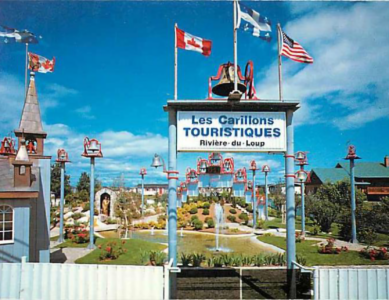
His impulse purchase turns into a passion. As his collection grows, his passion transmogrifies into obsession and then blooms to its inevitable apex — a roadside tourist attraction. Showcasing more than 500 ringable bells from around the globe and across the centuries, Les Carillons Touristiques de Rivière-du-Loup draws curious passersby and serious bell lovers alike over the next three decades.
Montreal architect Jocelyn Duff isn’t much of a church guy. He relies more on math than miracles. But the most stunning structure in his neighborhood — the Visitation Church of Sault-au-Récollet — is hard to ignore. In 2019, he’s finally drawn inside, not to seek salvation but to see two magnificent wooden sculpted doors depicting the early history of his island city. The church makes quick work recruiting Duff — a member of the Ahuntsic-Cartierville Historical Society — to give guided tours of the city’s oldest house of worship. While on duty, the newly christened tour guide finds a flyer claiming an artifact older than the church itself has been missing since 1990.
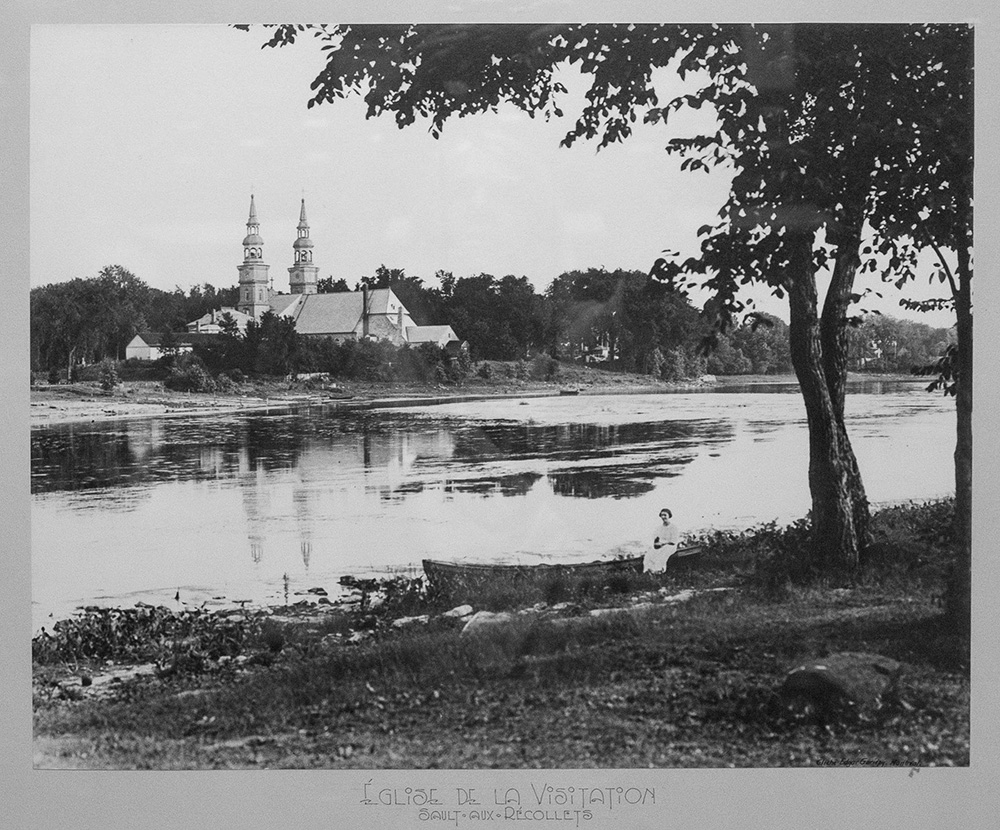
Cast by the Moyne family foundry in the Western French town of Saumur, the Notre-Dame-de-Lorette bell sets sail in 1732 for New France, a region consisting of five colonies spanning from the northernmost portion of modern-day Québec down to Louisiana, including parts of what are now eight Canadian provinces and 24 U.S. states.
It will be hoisted atop a Montreal chapel where the Sulpician missionaries who run this town will put it to work calling the Indigenous residents to adopt a more Catholic way of life. As the community grows from mission to congregation, a formal church is completed in 1751. The bell moves from chapel to steeple and gathers the faithful together for the next century. When the church starts extensive renovation in 1850, the bell is removed and placed in the custody of next-door neighbors, the Brothers of Saint-Gabriel.

Sometime during the latter half of the twentieth century, just like Chickie and his Liberty Bell, the Notre-Dame-de-Lorette bell quietly treks north along the Saint Lawrence. It makes a brief stop at Beaubois College in Pierrefonds before reaching J.M. Bastille’s scrap yard. Nobody connects the dots for thirty years.

Initially, Duff fears the worst. In missing persons’ terms, this is more likely to be a recovery than a rescue. But there will be no broken body of a bell to bury. If he could at least learn when and where the artifact was scrapped — and perhaps even whodunnit — the congregation could mourn and move on. Most of the people he needs to talk to are either dead, don’t remember or aren’t talking. Though he’s working with Visitation’s blessing, he’s still an outsider poking around an institution where the default operating position is behind a shroud of silence. He needs an inside man. Someone with the right set of keys, literally and figuratively. Patrick Goulet, the church’s coordinator of maintenance and services, fits the bill and quickly becomes good cop to Duff’s bad cop.
The first tip to come in is a second-hand story claiming the bell ended up in the Trois-Rivières area after it first disappeared. From there, the tipster alleges, it was stolen again and sold to an antiques dealer in Québec City. Then, the trail goes cold. In 2020, after a year of fruitless searching, the architect-turned-gumshoe flips open his laptop, fires up a search engine and types two words:
Cloche 1732 (Bell 1732)
This feels like fishing — a last-ditch effort from a man out of ideas. Surely real investigators don’t just Google things, do they? A few clicks later, he’s reading a local newspaper story from 2015 about a recently demolished church and the disputed ownership of its bell. For color, the reporter interviews a third-generation bell collector, Pierre-Luc Bastille, who proudly claims,
We have a Liberty Bell replica, the only one outside the U.S.
He then boasts about the oldest bell in his collection — cast in 1732.
Ding.
Duff emails the collector and arranges a phone call. Bastille says his grandfather bought the bell from an antiques dealer in Québec City.
Ding ding.
Then he shares its inscription:
ML Moyne m’a fait l’an 1732 (M.L. Moyne made me the year 1732)
Ding ding motherfucking ding.
Duff learns the artifact was part of a roadside tourist attraction that’s been closed to the public since 2010. The detectives — and that is what they are now, like it or not — try to arrange a visit. In the meantime, on Amazon, they find an out-of-print 2003 book by Isabelle Lussier titled Les carillons touristiques de Rivière-du-Loup.
One part J.M. Bastille biography and one part catalog of his collection, the book includes photos of the Liberty Bell replica and the 1732 bell. The duo compares the published photo to Notre-Dame-de-Lorette bell images from church archives. Both bells bear the same scratches in the same places, and the inscriptions are identical.
Once presented with evidence he’s in possession of North America’s third-oldest bell and a priceless piece of Canadian history, Pierre-Luc Bastille, General Director of the company that still holds his late grandfather’s name, returns the nearly 300-year-old lost treasure to its rightful owners.
As grand marshal of a parade through the streets of Montreal, Bastille sits high in the saddle atop a flatbed trailer as the City of a Hundred Steeples celebrates the triumphal return of New France’s oldest artifact. The reunited relic sits behind him, glinting in the July sun. Behind the bell sit Duff and Goulet, outwardly exuding quiet humility and inwardly bursting with treasure hunters’ pride. It’s not a Stanley Cup parade, but it’s close.
Well, that or something like it is what I or any average everyday Canuck would hope and expect to happen.
Instead, the collector doubles down on his previously publicized plan to keep the collection intact — even if that means a Canadian national treasure might fall into foreign hands. Around 2008, the Bastilles hire former Member of Parliament Yvan Loubier as a lobbyist to help win federal and private support for a new museum within the province. A slick(-ish) promo video is produced to sell the idea of relocating the collection to the grounds of the recently shuttered Québec City Zoo. That plan never gains real traction. The Musée PACCARD shows interest, but they only want the bells that were cast in France. Other, less serious offers come and go.
Bastille has both plausible deniability and a long-expired statute of limitations in his favor. In the eyes of the Crown, he’s the rightful owner of Visitation’s bell. If a Qatari prince or Silicon Valley tech bro makes the right offer, what little hope the bell hunters have will vanish. The church offers to buy back its own bell, but is rebuffed.
In 2022, out of options, Duff calls on former TV news anchor and current Minister of Culture and Communications Nathalie Roy for help. If she will bestow upon the bell the special distinction of heritage asset, then it will at least stay safe and in-country. But nothing happens. When Roy is succeeded by former TV news anchor Mathieu Lacombe, the hunters have new hope. In January 2024, the Minister personally calls Duff to share the good news. Speaking on the artifact’s significance, the old anchorman opines,
The Visitation bell is a link between different buildings and episodes in Québec’s religious history. It is inevitably part of our collective cultural heritage and must be protected.
For the Visitation congregation, the heritage asset declaration is a win. But it’s a hollow, silent win. It obliges Bastille to keep the bell in good condition and prevents it from leaving the province, but it lacks the legal teeth to force the relic’s return.
While Duff and the church wait for either miraculous or municipal intercession, he chases a hunch that there might be other missing treasures hiding behind the locked gates of Les Carillons Touristiques. Bells will do that to a person. Lussier’s book also pictures a heritage bronze plate bearing the official seal of the Québec Government — an object that does not belong in a private collection. Some internet sleuthing reveals the plate was reported stolen years prior. Searching for other people who might be desperately seeking their own lost bells leads him to Josh Gibson and to me.
Duff remembers Bastille bragging (in the same interview where he mentions the 1732 bell) that his Liberty Bell was originally intended for Puerto Rico. A photo published in Le Journal De Quebec in 2008 shows the grandfather Bastille posing proudly beside it. Like the rest of his collection, the bell is mounted on a bright red frame. A reverse image search using that photo would have served up Puerto Rico’s replica before its 2023 restoration, likely leading to the purported provenance. But, alas, Puerto Rico’s Liberty Bell hasn’t left the territory since it arrived in 1950.

Duff confabs with Gibson, and the two hunters ponder a possible Canadian connection in DC’s mystery. Since the replica was removed to make way for a new Canadian Embassy, and no local municipal body bore responsibility for it, perhaps it was simply returned to the construction site. Maybe the foreman made a few calls trying to find the bell’s keeper. Maybe nobody called back. Maybe he knew a guy who knew a guy who bought old bells. And maybe he asked a guy named Chickie to do a little favor for him. Stranger things, it seems, have already happened in Rivière-du-Loup.
But to prove the Bastille bell is indisputably the DC Bell, someone must get close enough to find a serial number — or the absence thereof. With the help of some similarly obsessed folks, especially the late Rick Brock, serial numbers for all but two of the 57 Treasury bells have been accurately cataloged. Therefore, the DC bell will bear either the number 28 or 50. Most later Paccard replicas lack serial numbers.
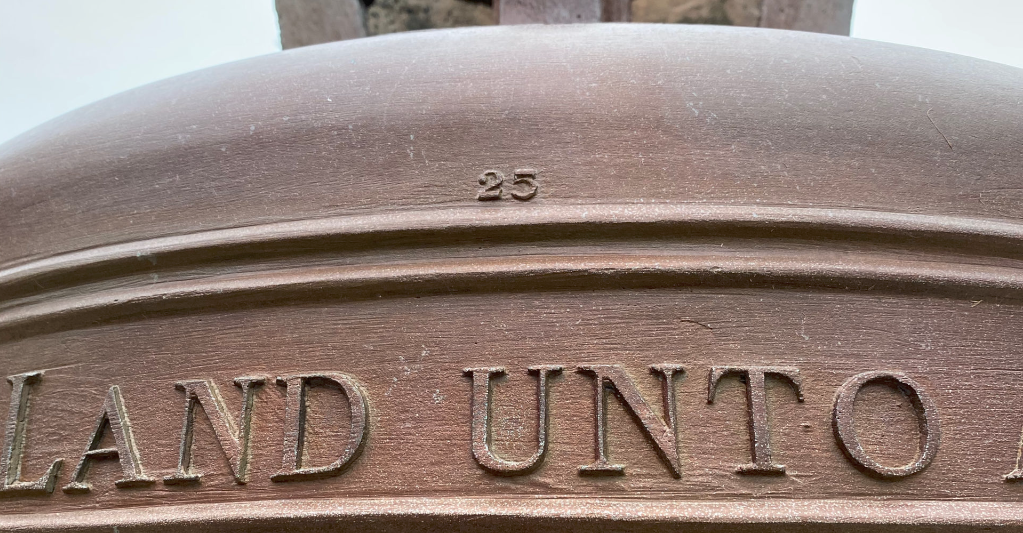
Available Bastille bell photos aren’t detailed enough to show a serial number. But it looks like a Paccard, with a carved-in crack and bas-relief bolt — two details the foundry didn’t include on the 1950 replicas. However, these features could have conceivably been added more recently, especially if someone was interested in altering the appearance of a stolen artifact.
While the Bastille Liberty Bell’s cosmetic crack casts doubt on the DC connection, an excerpt from Les Carillons Touristiques pretty much closes the case,
In the 1980s, after a visit to the tourist Carillons, Pierre Paccard, owner of the Paccard foundry, offered to cast Jean-Marie a replica of the Liberty Bell at a good price. Jean-Marie readily accepted this offer, thinking that it would be an excellent way to thank the many American tourists who visit his exhibition annually.
Now, if you’ll permit me to keep Ockham’s Razor at bay for just a moment — maybe Paccard had a bell to sell at a good price because he bought it back from a city that no longer wanted it, cleaned it up, made minor modifications and sold it as new 840 miles away. I want to believe. But I can’t. Chickie and his Liberty Bell remain a wishful figment of my imagination, like some lost 11th track on Bruce Springsteen’s Nebraska.** I, like Duff in the early days, think my country’s missing bell has long since seen the crucible, and we’ll never know when or where or why it met its fate. Duff, however, holds out hope,
An iconic bell like the Liberty Bell — recognizable by anybody on earth — has more value than its metal weight. There is a real possibility it has been preserved and not destroyed. Our bell was displayed to the eyes of thousands of visitors at Les Carillons Touristiques for 20 years, 400 kilometers away from home. It was published in a book sold in bookstores … and nobody noticed it. There is a chance the DC Bell is silent somewhere.
We’ll see about that.
While a miracle might still bring the Notre-Dame-de-Lorette bell back home, money would also do the trick. How much, exactly, is up to Pierre-Luc Bastille. But everything has its price — even priceless national treasures.
One thing I’ve learned about bell lovers — they’re a small yet extremely passionate bunch. And everyone seems to know everyone else. Maybe someone reading this knows someone who wants to buy a one-of-a-kind collection of 500-plus historic bells. All they’d need to do is give one old church bell back to one old church.
For my finder’s fee, a Liberty Bell will do.


*Other titles I considered for this article: CSI-Québec, Cloche and Dagger, Cloche Call, The French Canadian Connection, The Clocher
*After I wrote this, Bruce Springsteen released a 4-album celebration of all things Nebraska, including 5 lost tracks. None of them is about a guy named Chickie who sells a stolen Liberty Bell.